
Yarn Construction
Yarns that are smooth, not sticky and multi-ply with a good twist work best for both Woven, Fission & Fusion Knitting.
A smooth yarn allows the design stitch to shift and even out with blocking. The design stitches in Fusion Knitting will shift to cover design stitches on the other side; this helps with reversibility.
In Fission Knitting & some forms of Woven Knitting, you must separate your yarns to work the design stitches. Rustic/sticky yarns or yarns that felt easily make this difficult.
Most yarns that are good for cabled projects are suitable. A multi-ply yarn with a round construction makes the design pop.
Design stitches are worked through the back loop and are often cabled. A yarn with a good twist that doesn’t split makes the knitting more enjoyable

The yarn for the green swatch is bumpy and contains mohair. Notice that the cables lay flat on the surface of the fabric and the stitches are uneven. The yarn for the orange swatch is ideal. Notice how the cables pop off the surface of the fabric and look even.
Choosing Colours
There must be enough contrast between your yarns to make your cables visible. To test if there is enough contrast, take a picture of your 2 yarns together with your phone. Then edit your photo to make it black & white (greyscale). If you can distinguish your yarns in the picture, there will be enough contrast for the project.
Solid/tonal colour pairings with good contrast are an excellent choice. If you are not using solid colours, ensure that there is no overlap in colours between the two yarns.
Many knitters get nervous that their yarns do not have enough contrast at the start of their project– even after doing the black & white test. This is because they are comparing their cable colour to background colour; the contrast between a cable’s colour and the background colour is only half of the contrast between the two yarn colours.
I recommend knitting until the cables are well established. The contrast will be better after completing 1-2 inches of work.
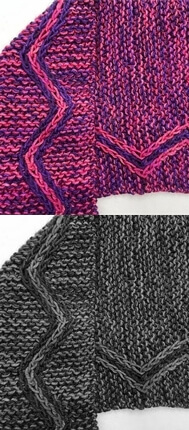
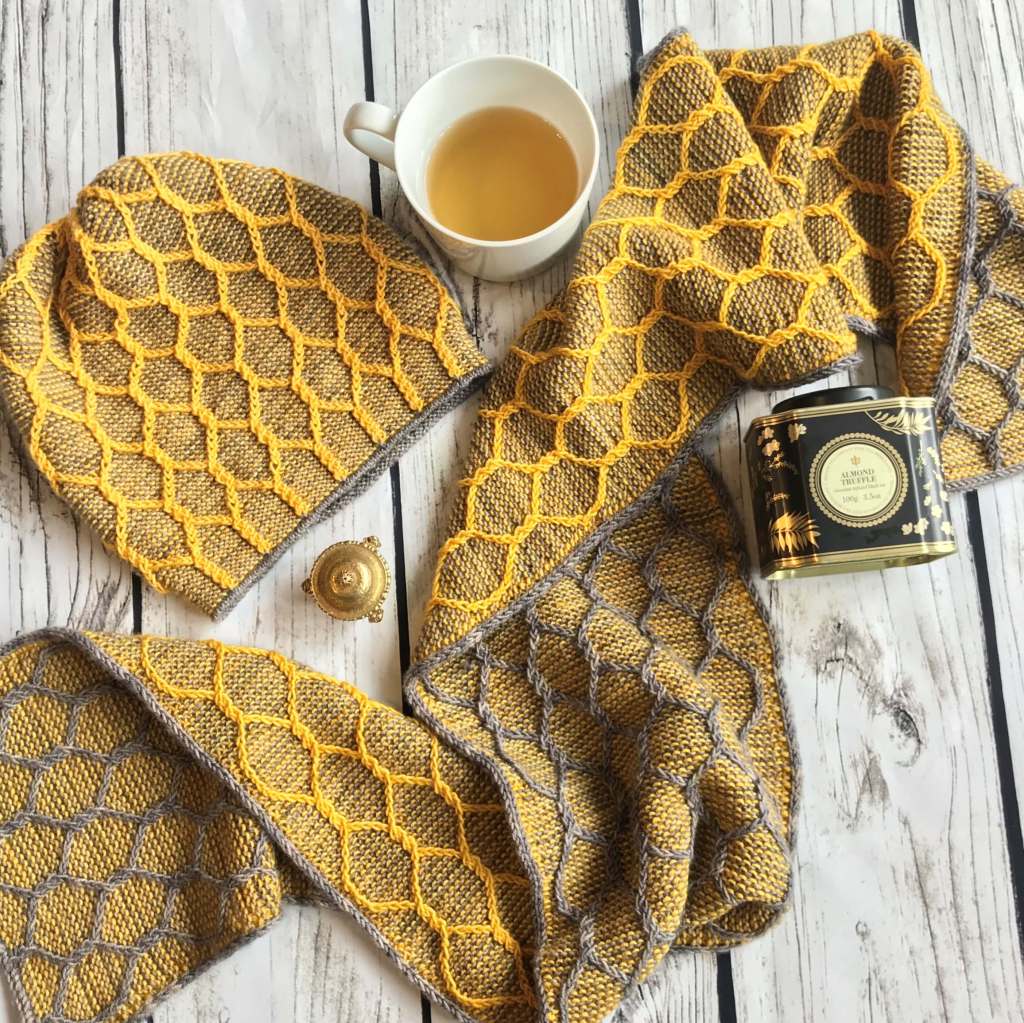
Yarns in high contrast colours are an excellent choice.
Pairing a saturated colour with neutral works well.
A light colour neutral (white/cream/light grey) will brighten your project.
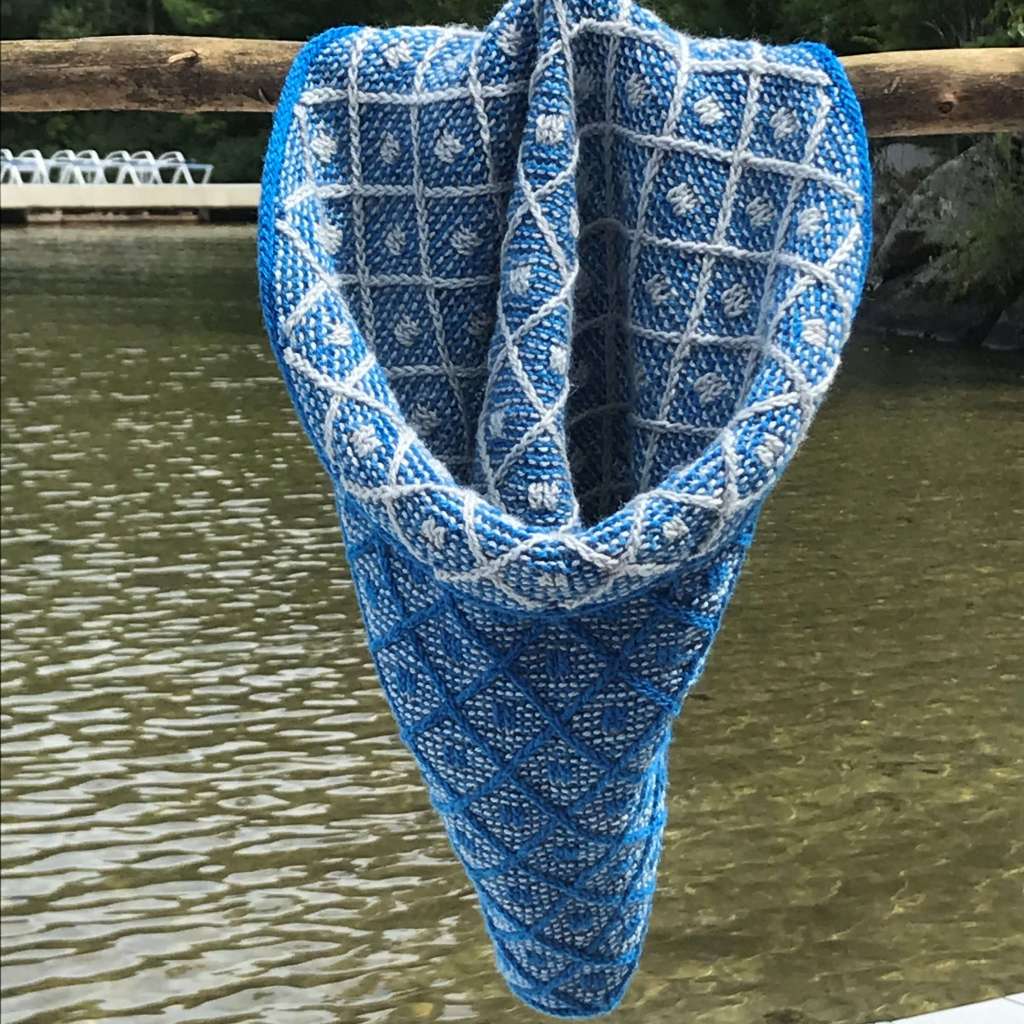

Tone on tone colour combinations create an elegant/cohesive look.
Check that the colours have enough contrast.
Gradients yarns work beautifully.
The colour change is subtle when viewing one side of the work & more dramatic on the other side.
Pair the gradient with a solid colour or another gradient. Ensure that there are no overlapping colours between the two yarns.
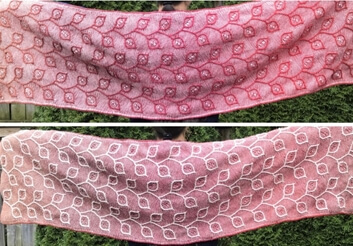

Self striping yarns work well paired with a solid.
Yarns where the colours are cohesive (that is, no colour dominates) are better. Ensure there is good contrast between each colour in the self-striping yarn and the solid.
Self Striping yarns work well for narrow fabrics such as scarves. They do NOT work well for wider fabrics such as wraps or blankets because the stripes become too narrow.
Do NOT pair 2 variegated yarns together.
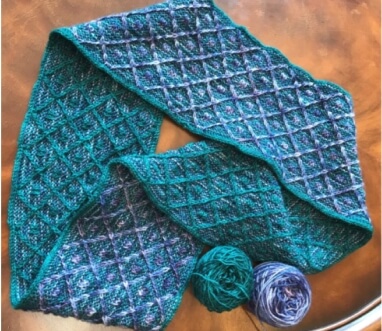
Pairing a variegated with a solid creates a bold design on one side and a softer look on the other side. Choose variegated yarns with cohesive colours.
Ensure there is no overlap between variegated colours and the solid.
 Mary W Martin